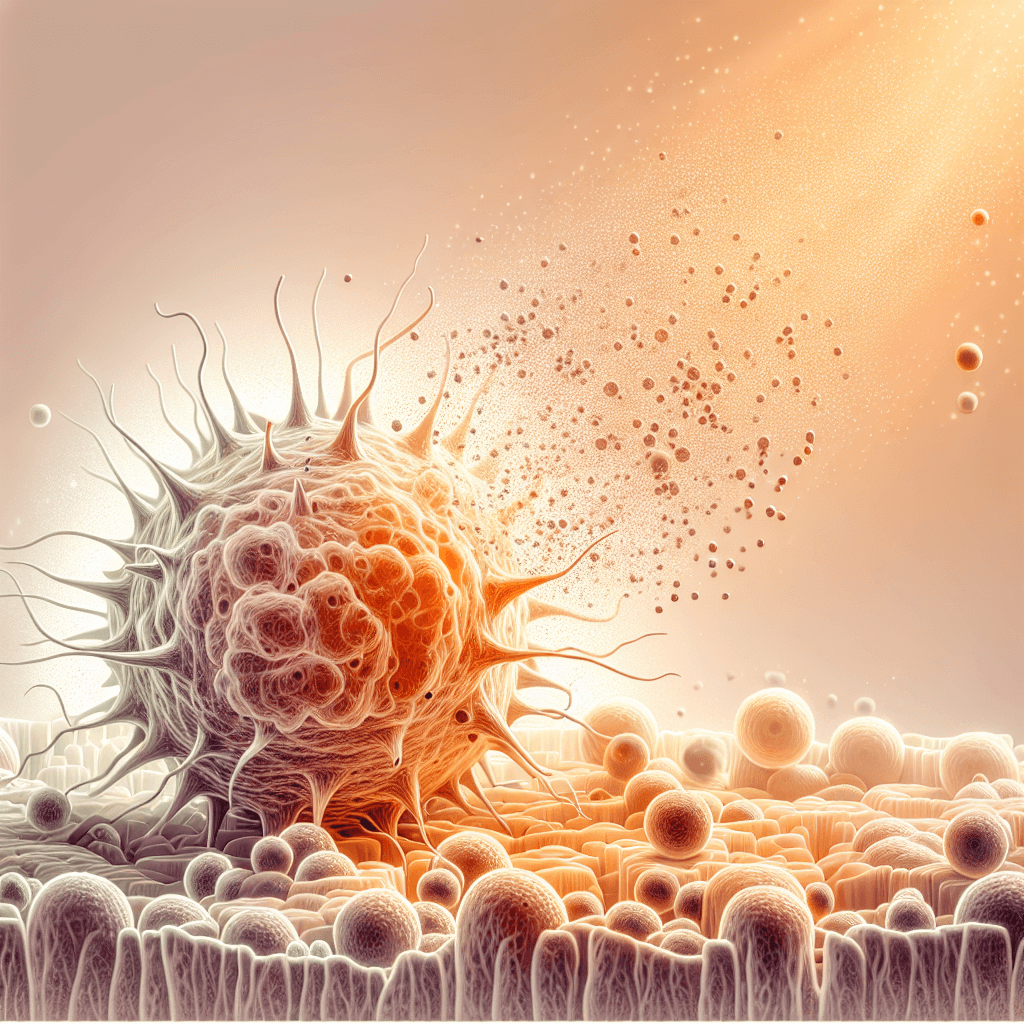
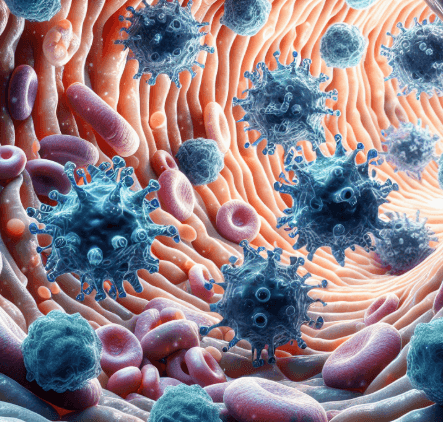
AN ALLERGY is when the immune system overreacts to a harmless substance, called an allergen, and produces IgE that binds to the surface of mast cells
Allergen re-exposure then triggers mast cells to release powerful substances that cause allergic reactions such as sneezing, hives, swelling, difficulty breathing, and severe reactions called anaphylaxis
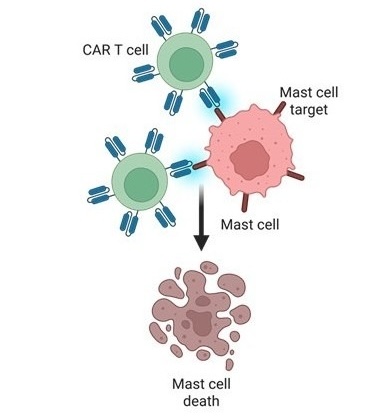
AllerGene’s approach uses targeted lipid nanoparticles to deliver short-lived mRNA to immune cells, enabling the body to temporarily generate CAR-T cells in vivo. These CAR-T cells can transmit inhibitory signals to safely and selectively remove mast cells, the central drivers of allergic and anaphylactic reactions. As new, non-sensitized mast cells naturally regenerate, the immune system resets—without permanent genetic changes.
The T cell mechanism for cell elimination
A T cell can kill mast cells via apoptosis, a controlled self-destruction that shrinks the cell, forms membrane blebs (balloon-like protrusions) that encapsulate internal contents, and fragments into “apoptotic bodies,” preventing inflammation and leakage of internal granules such as histamine, unlike messy necrosis, where contents spill out. T cells trigger this through either perforin/granzyme (creating pores for granzymes to enter and activate caspases) or Fas/FasL (receptor-ligand binding), both activating executioner caspases that dismantle the cell from within, resulting in tidy removal by phagocytosis.
Smarter Biomedical Research with AI
AllerGene’s Custom AI Engine
Ask a research question and compare answers from Claude, ChatGPT, Gemini, DeepSeek, xAI and more – with sources.